The Making of a Worker's Paradise
A long piece on the Bolsheviks' political triumph against Russian liberals and competing leftist programs through historical and literary analysis.
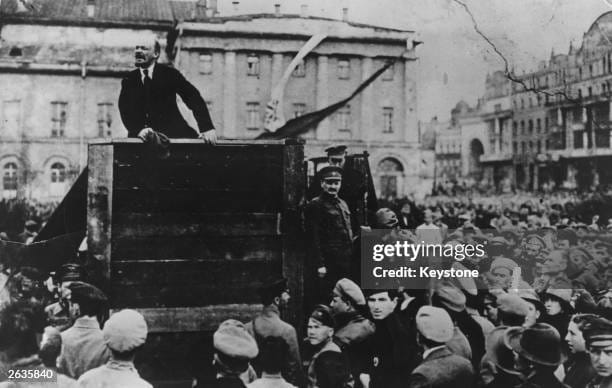
The Russian revolution is one of the most significant and famous revolution in history. Second only perhaps to the French and American revolutions in its importance, it continues to live in the popular imagination through classic works of literature, movies, tv shows and virtually every other form of media. It is also a continual wellspring for academic work, conjecture and analysis. Finally, it is inherently fascinating in its own right.
However, as with any eventual historical moment, its outcome was not always guaranteed or inevitable. Indeed, the preceding decades of the 1917 Bolshevik revolution were fraught with a veritable kaleidoscope of various political visions for Russia, revolutionary or otherwise. Doubley-so within the revolutionary firmament of the period, there were various strains of revolutionary visions competing for their instantiation within political time and space. The Bolshevik vision was one of many, that by hook or by crook, came to achieve dominance among other alternatives.
This being so, this essay will endeavor to answer the question of why did Bolshevism succeed where many other revolutionary movements did not? Due to constraints, it will necessarily be limited in scope below the true breadth needed to answer such a question fulsomely. However I will attempt to answer the question substantively by examining a few of the major revolutionary strains and their most relevant concomitant offshoots. This will be done through historical research in conjunction with selected passages from classic Russian literature that deals in pertinent themes. Namely Fathers and Sons by Ivan Turgenev and Dr. Zhivago by Boris Pasternak. Through this selection I hope to provide a better understanding not only the Russia revolution in situ, but also phenomenon of revolutionary dynamics more generally.
Literature in general, and these two books in particular, are very useful and insightful for the study of historical events, especially ones regarding inherently human endeavors such as revolutions. Though we can of course come to an understanding of great events from empirical data such as number of railroads, pounds per annum of coal produced, demographic swings and so on, a political event does not take place on these levels. These are simply abstractions of the multiplicity of innumerable human experiences that occur in the lives of a given population that undergoes a revolution. Ultimately revolutions are made of discrete decisions by human beings due to a confluence of factors that are impossible to fully capture from empirical data, or even in official decrees, documents, meeting minutes, speeches, etc. Though this data is of course necessary to understanding history, literature is perhaps one of the best ways to form a complete picture of these grand moments.
Therefor our two books will help us examine the principal types of people who participated in the revolution. And unsurprisingly there is a good deal of relevant material within their pages that adhere exactly to discussions of larger political ideas, changes of governments, victories of armies or political parties expressed in the particular of individual lives. The characters are representative of people of the time generally, which is highly useful in parsing larger questions like the one our thesis is focused on. This applies exactly to the characters in Fathers and Sons who are, naturally, generational forerunners of the ones in Dr. Zhivago. Explicitly, in both works we have the Leftist revolutionary and the Liberal intelligentsia, who are most pertinent for our discussion. There are also of course various other representative characters within both works across the gamut of the political spectrum in Russia during the time. In sum, the study of history in conjunction with literature is in some ways a resolution of the proverb of ‘losing the forest and the trees’. One must study both the forest (data and historical works) and the trees (literature) to gain the most relevant understanding.
With this in mind we can turn to both our pertinent history of the Russian Revolution and analysis of scenes from our books. Revolutionary moments do not ‘just happen’. They are decades long in the making, at the very least. This truth relates to our inquiry in that during revolutionary movements, there is often internecine disagreement that bears out in profoundly consequential ways for a revolution. This is generally true of all revolutions and it is certainly true for the Russian. To this point, it’s also critical to understand the relationship of the entrenched regime, its reaction to various segments of dissident political activity and in turn how such a dynamic shapes the given revolutionary movement. We will examine this as well.
Given a general history of the Russian revolution is well outside the scope of this essay (and beyond my academic competencies at this point), I will necessarily be dispensing with a great amount of interesting details and subcomponents of a complex historical ‘event’ that took decades in the making, perhaps even centuries depending on where would like to draw the proverbial line. However, it is needed to sketch a basic understanding of relevant Russian history prior to 1917 to effectively explore our thematic question.
Therefor I will spend some time elucidating relevant history. In order to draw a concise thread through this piece I will especially focus on history relating to both our selected works and the question of competing visions of revolutionary ‘success’ within Russia. As in any history, the beginning is somewhat arbitrary. For our purposes, it seems most apt to start in the period just before our first book takes place chronologically, 1859, and to continue on until the time period of roughly the early 1920s, just after the conclusion of the Russian Civil War.
An interesting and helpful mental schematic that this timeline engenders is that of a genetic bottleneck. In early periods of revolutionary firmament there is wide ‘heterogeneity’ of political movements. Then, due to exogenous stressors of grand scale, there is a constricting of potential, and other possibilities are ‘killed off’ or go ‘extinct’. In the case of the Russia revolution, the former is an apt metaphor indeed. So, without further belaboring, let us begin our sketch of relevant Russian history.
At the time of the plot of Fathers and Sons, Russia was a full fledged empire playing the same game of world-domination as other great powers in the burgeoning hey-day of imperialism. However, the empire was by no means a united polity. Wrenched from it’s insular, medieval worldview kicking and screaming by Peter the Great only in the early 18th century, by the mid 19th-century, Russia was still grappling with deeply conflicting ideas of what the country was and should be. The core of this conflict orbited around two very important dynamics that are central to answering our thesis. They are serfdom and the Industrial Revolution.
Despite Peter’s, and later his granddaughter in-law Catherine, fervent and concerted attempts to modernize and westernize Russia, serfdom, little more than slavery and a living relic of feudalism, was the order of the day in Russia at the time of Fathers and Sons. It was emblematic of Russia’s insularity and backwardness, not only to the outside world (mostly Europe) but also to many Russians themselves. It was also an expression of a deeper reactionary conservatism that ran through the core of the empire, from serf to aristocracy to the czar.
This is encapsulated in the phrase ‘Orthodoxy, Autocracy and Nationality’. This ‘Official Nationalism’ was an express formula that shaped the outlook of many Russians, including the ruling class. It posits the Czar as divine-rule benefactor that presided over Russia through the auspices of the Orthodox church and the aristocracy. Indeed, it was formulated by the minister of education under Czar Nicolas I (1825-1855) and promulgated as shaping statecraft internally and externally in a variety of manifestations. For our purposes it is a useful summation of the countervailing spirit and axe to grind against for the revolutionary strains we will examine shortly.
As previously mentioned, the other major concomitant historical force contra serfdom and reactionary conservatism in Russia at the time was the Industrial Revolution. Not only was it the progenitor of the material changes that, to borrow an oft used phrase, heightened the contradictions of Russia serfdom, but the global phenomenon also was fundamental in providing the theoretical ammunition for the revolutionary powder-keg of the October Revolution.
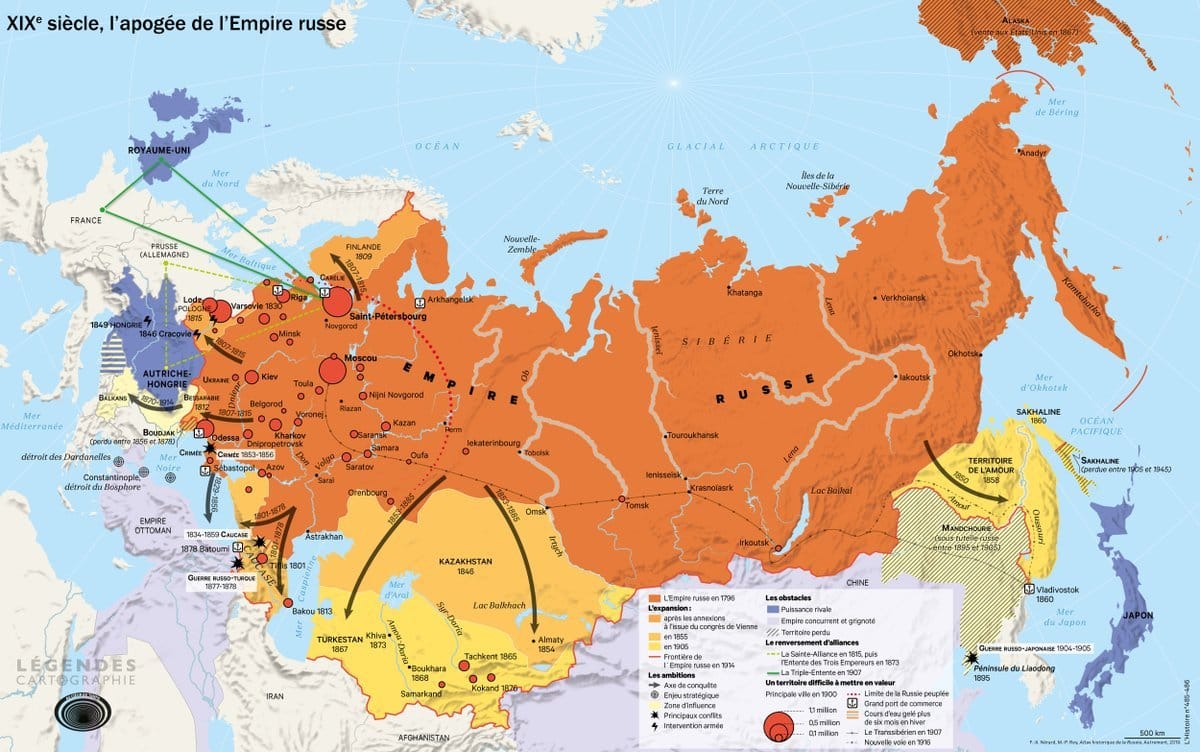
Though it is never possible to separate the two entirely, it is important to delineate the Industrial Revolution as a western phenomenon and import in large respects. This is broadly true in both material, financial and theoretical terms. From the railroad to French loans to the works of Karl Marx and numerous other political thinkers. It is also fundamentally true of a core divide within the Russian Empire itself, as well as we shall see, within the differing revolutionary factions. It had been true since at least Peter the Great, and certainly heightened under Catherine. It is a split between the West and East, Russia as being both one or the other, a mix of both or something entirely different. The disagreement over ‘Western’ v. “Russian’ influences is very impactful in a variety of ways to our query.
With this meta-factors in mind, and though it may be overly reductive, it’s fair to say that the Russia empire in the 1860s onwards until the 1917 revolution was split between these two opposing forces; reactionary conservatism and revolutionary industrialization. By the latter term I do not mean just the Industrial Revolution. As well as the material, economic transformation of the industrial revolution I also mean the political and social revolutionary changes it wrought as well. So it follows that the Russian Empire was constantly at odds with itself throughout it’s history, and increasingly so throughout the works we will examine.
This not only due to the East-West dilemma, but also due to the ontology of a polyglot, multi-continent spanning empire. There were dozens of various ethnic, religious and national entities all under the auspices of the Russian Czar and imperial bureaucracy by 1860. The empire would continue to expand on and off through the end of it’s days. ‘The Triad’ of Orthodoxy, Autocracy and Nationalism was used as a homogenizing philosophy by the imperial bureaucracy to facilitate all the various populations being incorporated into the empire – Germans, Finns, Abkhaz’s, Tartars, Ukrainians, Mongolians, Poles. Orthodox, Protestant, Catholic, Jewish, Muslim religious constituents. Cossacks, Armenians, Kazaks, Georgians. The list goes on. The empire was vast, multivariant and had many constituencies that did not walk easily under the czarist yolk. The central bureaucracy needed to promulgate ‘Russification’ to unify this vast patchwork polity.
Now that we have a broad sketch of the Russia empire through it’s later period prior to the revolution, it is time we add in the relevant revolutionary taxonomy particular to Russia. To employ another biological metaphor, hopefully profitably, the bottom three strata of Linnaeus’s taxonification seems applicable. If the political phenomenon of revolutions broadly is relative to ‘class’ in Linnaean taxonomy, then it follows that there are three types of phyla subsidiary to revolutions proper. These would be Liberal, Marxist and Anarchist. Within these broader phyla of revolutions are various species. In this article we will limit ourselves to broadly describing the phyla level and then examining in more detail a few of the ‘species’ of revolution, particularly within the Marxist and Liberal tradition within Russia.
We will do so through our literary selections and with our thesis in mind of examining why Bolshevism triumphed in the 1917 revolution. Though various theories gain ascendancy and in turn decline, there are three major phyla as we have already mentioned. They generally bifurcate on the East v. West divide as we have already introduced as well. With this theoretical schema we can now proceed to sketch our various phylum of revolutionary variations extant at the time.
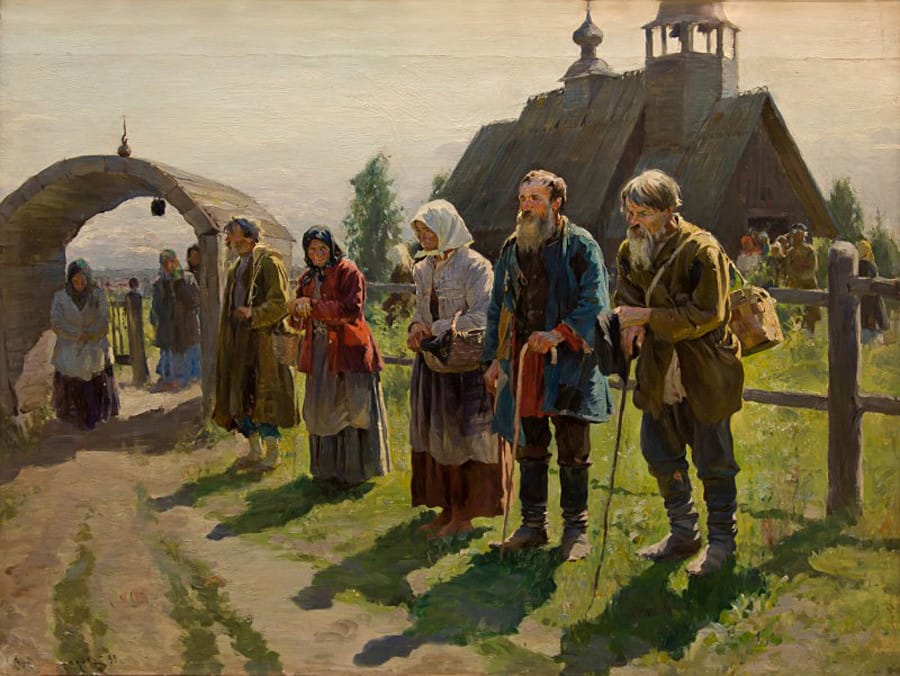
The eastern facing, Slavic-centric revolutionary sects are typically anarchists and social revolutionaries (or SRs). These branches of leftist revolutionaries represent the far left in Russia the time as they were either anti-statist, as in the case of the Anarchists and/or terroristic in their revolutionary tactics, as in the SRs. They emphasized, contrary to the variations of Russian Marxists, the unique revolutionary history and potential of the Russian peasant. They viewed their revolutionary programs from a Russo-centric point of view and dismissed a good deal of western political theory as non-applicable to the Russian situation. This usually manifested in a ‘Volk-ish’ description of the Russian peasant.
The Marxists would represent broadly the center left, though this is a misleading designation and only useful relative to the Anarchist/SRs. They were however significantly different in their adherence to Marxism in core ways, as well as seeing Russia as being a part of the greater proletarian revolution necessary in response to the global industrial capitalism of the time. Indeed, they believed Russia was the vanguard of said world revolution. However they were broadly incrementalist, once again in contrast to their far-left cousins. They either believed in the necessity of a preliminary bourgeoise revolution a la Marx or in a participating in liberal parliamentary politics as a sufficient political program to try to improve working conditions of the proletariat. They were the Bolsheviks, Mensheviks, Legal Marxists and the like.
For liberals, there were several different ‘species’. They were, as most comfortable, prosperous, professional classes are, broadly supportive of the Czarist regime. Though the Russian middle class was later in developing than their neighbors to the west in Europe, by the time of Fathers and Sons there had already been a revolution of a liberal variety that had occurred in the capital of St. Petersburg. It had been precipitated by a core of army officers. Liberalism in the sense of the time period can broadly be summarized as a constitutional monarchy under a rationalized and meritocratic bureaucracy, like Napoleonic France.
The Russian army under Czar Alexander I had conquered much of Europe in rolling back Napoleon from the crest of his invasion with the burning of Moscow. After defeating Napoleon a generation of Russian officers had seen the modern west and interacted with intimately with numerous of their counterparts in more ‘enlightened’ nations. They liked what they saw in turns of constitutions, legislative bodies, rule of law, constitutive rights and laissez faire economic development. They returned to Russia and were ashamed of the backwardness and insularity of their country’s systems. To put it another way, they saw the chains that Orthodoxy and Autocracy had on their country. But, and this is a key difference between liberalism and our other phyla of revolutionaries, they were Army officers – proud Russians – they were very much still on board with Russia as a nation. Indeed, if anything their revolutionary fervor was directed towards improving Russia as an empire. They still wanted empire, they just wanted it better.
Indeed, the ‘Decemberists’ as the liberal revolutionary army officers of 1830 came to be known, were trying to precipitate a palace coup. This has a deep precedent in Russia history. However, a salient critique of their revolution could be said that they tried a revolution without having a base of support to truly take power from. So in turn what would have been a palace coup was crushed. There was no popular, democratic support, let alone aristocratic support enough to actuate this particular revolution.
However, this iteration of Russian revolutionaries is key for our ends here because they are exactly the type of people who are figured in Fathers and Sons, and more broadly the development of the Russian revolution. They are a generation later, liberal nobles who have not been able to substantially change power and so go back to their estates, doing their best to change in a local, disjointed manner. They are juxtaposed with the new generation. Bazarov, a nihilist. These ‘nihilists’ are proto-Marxists, Social Revolutionaries and Anarchists who would eventually bring about the October revolution. This being so, they deserve our attention as a promising avenue of investigation to answer our thesis.
Now to our first book and some relevant scenes. Fathers and Sons takes place in the summer of 1859 in a generic rural Russian province. It follows the meanderings of two students, Arcady and Bazarov. Arcady is the son of a provincial noble whom the pair visit. Bazarov is the son of erudite ex-army doctor who also lives in the province. Arcady’s father, Nicholas Petrovitch is an ardent liberal, having preemptively set his serfs free and working on a model farm. His brother and Arcady’s uncle, Paul Petrovitch, lives with his brother and is also of a similar liberal temperament though he is more chauvinistic in his aristocratic and Russo-centric opinions. Bazarov, as well as Arcady for a time, are nihilists, though it is Bazarov who really carries this mantel. He, like his liberal interlocutors, is the forerunner of the crystalized political movements in two generations hence that will carry out the October Revolution. Though for now, his philosophy demands negation in all things and is so much less a genuine political ideology, though it is so in it’s emerging form.
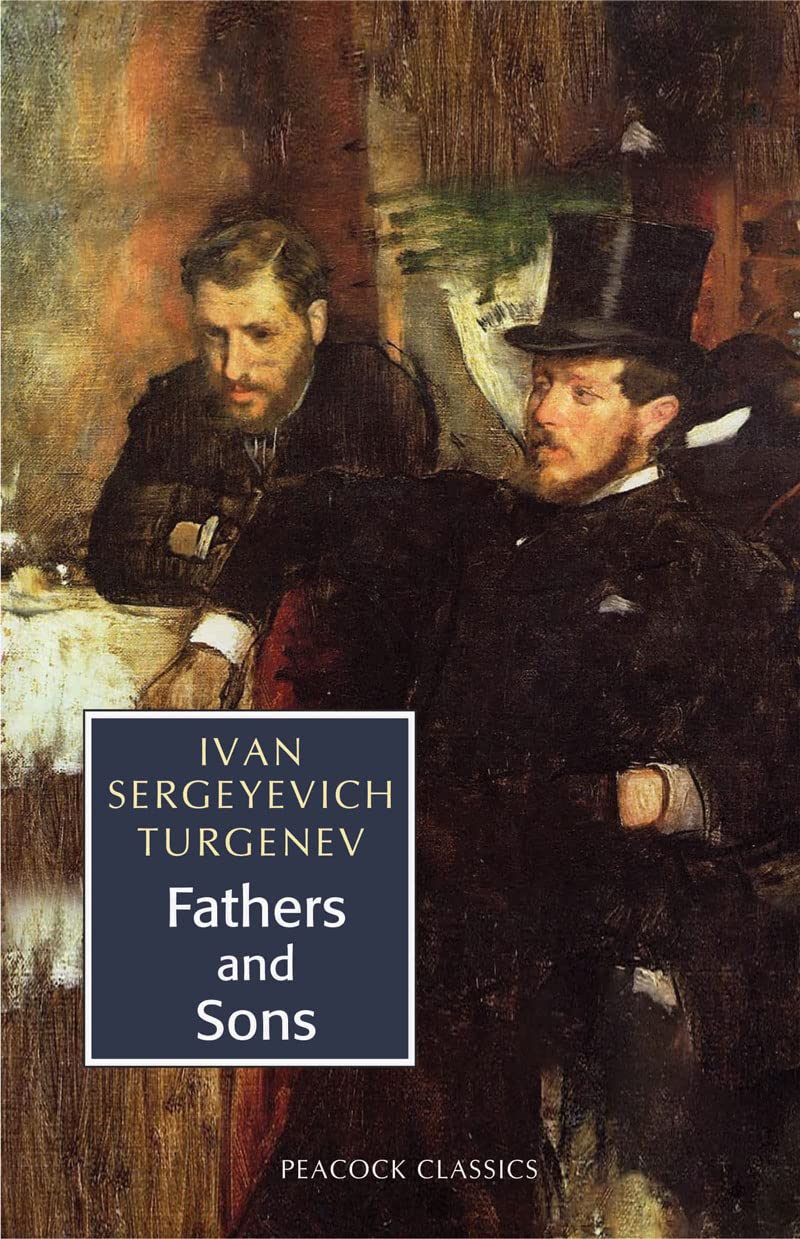
There are three scenes that are critical in understanding the larger development of political revolution in Russia that we are after. The first, a teatime argument between Bazarov and Paul Petrovich, the second being the duel between the two later in the book, and lastly the parting of Bazarov and Arcady. Symbolically these scenes presage the greater conflagration that Russia would later endure. For our purposes I believe they represent the internecine conflict within the revolutionary left in Russia as well as the greater conflict of the civil war, respectively. Let us examine why.
In the first scene Bazarov and Arcady are the honored guests of the two middle aged gentlemen Nicholas and Paul. Formerly worldly men, and now proud of their ideals being put into practice on their model estate, they are excited to talk with the next generation of intellectuals and how they see political questions of the day. Only they are in for a rude shock, and indeed things cut to the quick rapidly.
First Nicholas overhears Bazarov and Arcady declaring that the two older men are over the hill in their politics and temperament. This manifests in Bazarov criticizing Nicholas for reading Pushkin. He prompts Arcady to give him a very different book – Force and Matter by Ludwig Buchner, a core text of materialism from the 19th century. In this passage we can see already the fault lines being drawn within the ‘dissident’ left. Romantic, Russo-centric literature in exchange for hardcore western materialism. Later that day at tea things come to a head. Paul and Bazarov begin to go at it. Bazarov utters fairly brief but portentous sentiments, especially in regard to our thematic analysis:
“Aristocracy, liberalism, progress, principles, just think, what a lot of foreign - and useless – words!
(to Paul) …I hope you have no need of logic to find a bite of bread when hungry. What have we to do with such abstractions!”
This is a fascinating moment because it lays bare more core disagreements of Russian revolutionary dissidents and begins to get at why the Bolsheviks ultimately triumphed. The comfortable liberals miss what’s under their nose in Russia. Their political rights are abstractions that they are able to care about because they are materially comfortable. Lenin, Trotsky and the Bolsheviks on the other hand nailed the fundamental concerns of their core constituency when they promulgated the slogan ‘Peace, Land and Bread’ during their revolutionary campaign. This fundamental difference between revolutionary wings is being hinted at strongly here, the echoes of Lenin being heard in Bazarov’s critiques of the comfortable and ‘principled’ Paul.
To continue parsing of Fathers and Sons we’ll turn to one of the later scenes in the book; the duel between Paul and Bazarov. Though a great deal of context is not necessarily pertinent to our analysis, the scene is highly relevant symbolically. The aristocrat Paul and the nihilist Bazarov hate each other, Paul challenges him to the duel, exhibiting the vestiges of his aristocratic bent. Though Bazarov dismisses of it as stupid in the abstract, he cannot help but viscerally participate. To me this is representative of the conflict in Russia writ large between conservative reactionism in Paul and the entirely different generation and class in Bazarov. They cannot understand each other and thus cannot help but come to blows due to the gulf between their worldviews. Just so for the conflict between the Whites and the Reds some sixty years after the ‘events’ of the book. The conclusion of the duel is not relevant, but the symbolism of it is highly so.
Eventually too, even Bazarov and Arcady part, where Bazarov gently reproves him. He does so in exactly our vein of analysis. In speaking to Arcady he says:
“You have only youth, ardor and passion, but no arrogance or vehemence; and for the ends we pursue this is quite useless. Your fellow noblemen cannot get much further than well-bred resignation or indignation, and that’s just trivial. For instance, the likes of you won’t stand up and fight – and you imagine you’re heroes! – but we insist on fighting. …unconsciously you admire yourselves, you find pleasure in railing against yourselves; but we find all that boring – give us fresh victims! We are made to break other men! You may be a good lad; but you’re too soft, a liberal gentleman…”
In these words, Bazarov further elucidates the divide between the complacent liberal bourgeoise attitude and one of the incendiary, violent revolutionary spirit. This character marks this difference with keen precision. This difference in spirit, one grounded in the toleration or maybe even taste for violence, is one that will iterate more clearly in examining Zhivago and Strelnikov and is key to understanding the success of Bolshevism contra liberalism in Russia. This is one manifest case of how these characters represent versions of the eventual fleshed out manifestations of revolutionary conflict to take place in some two generations time.
Through examining the early expressions of liberalism and proto-Marxism in Fathers and Sons, let us move forward in history. There is a key historical moment just after the period of Fathers and Sons that represents an inflection point within Russian history towards eventual revolution. It is also an emblematic expression of the internal conflict within the empire. It is core to our main themes that precipitate the 1917 revolution. It is the emancipation of the serfs.
Alexander II, the grandfather of the final Czar Nicholas II, was known as the ‘Czar Liberator’ because in 1861 he emancipated all serfs throughout the Russian empire. This was not an immediate occurrence, as it was proclaimed that it would take place over a period of two years. Also, critically, it was put onto the serfs themselves to pay in the form of a long term debt for their own freedom. This was done to ameliorate the anticipated uproar within the aristocracy at losing their ‘property’ and so they had to be compensated. Known as the ‘redemption tax’ it would become a focal point of peasant ire against the Czar and deeply weaken the affiliation the common peasant felt towards the regime, thus laying the ground for the revolution to come.
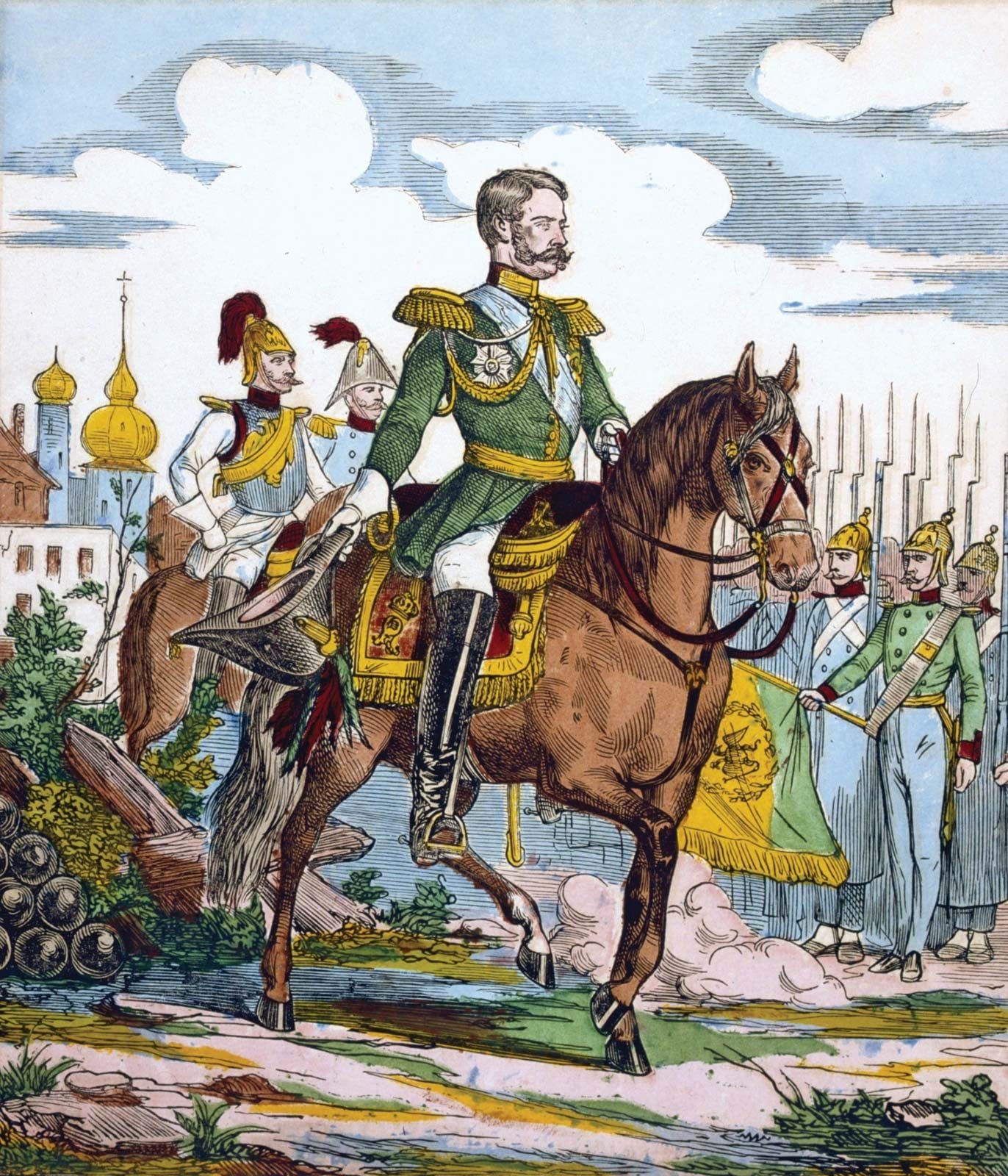
In this vein, we can see how the ‘liberals’ Nicholas and Paul Petrovich feel entitled to their moral superiority, and their simultaneous exasperation at the younger generations' recriminations towards their ‘backwardness’. They are well ahead of the curve in 1859, already having freed their serfs before the czar, accepting no indemnity payments, and are considered radicals for doing so.
To summarize a great deal of history from the 1860s to the 1917 revolution, Russia eventually faced tremendous turmoil throughout the latter half of the 19th century and into the new one. The ‘Czar Liberator’ eventually became a recalcitrant reactionary throughout his nearly thirty-year reign. His partial liberalization in no way satisfied a majority of the reform minded Russian population. Indeed, his reforms seemed to exacerbate a good deal of conflict within Russia. The most significant ways were being the freeing of the serfs, by both placing an onerous tax burden on the populace through buying their freedom and simultaneously uprooting a good portion of the population from the heavily rural countryside and transforming them to a landless, roaming proletariat. The migration of the peasants to the cities would radicalize many of them as they encountered the hellscape of working conditions that awaited them there, as well as many of the professional revolutionary class active in Russian cities like Moscow and St. Petersburg then.
Eventually Alexander II was rewarded for his liberalizing efforts by a bomb being thrown at his carriage, whereupon he was blown up, facing a grisly end. In turn, having seen the gratitude for liberal reforms that his father had engendered, his son Alexander III, took power and enacted a deeply reactionary reign over the next thirteen years. This was a resurgent time for ‘the Triad’ of Orthodoxy, Autocracy and Nationality. Alexander reorganized the security service during his first period and birthed the ‘Okhrana’ (state secret police) in their stead. Over the subsequent years, Russia became an even more entrenched bureaucratic police state.
Simultaneously during this time, to keep up on the world stage of great power imperialism, a certain minister was given great power to reform Russia economically. This was Sergei Witte. Having risen through the ranks at a rail company he was eventually appointed as finance minister for his competence. Indeed, he was competent and spearheaded a great deal of economic progress under Alexander III known as the ‘Witte Boom’. This manifested mostly in the improvement of Russia’s rail system, notably in the Trans-Siberian Railway. This period marked significant improvement in Russia’s economic output as well as exacerbating the conflicts of the rural peasantry, urban intelligentsia and the burgeoning urban proletariat with the czarist regime throughout the empire.
This period in Russia history culminated in the revolution of 1905. Yes, Russia had another revolution. However this one was mostly non-violent. Now in the reign of the last Czar, dear old Nicky, the empires conflicts were coming to a head. Nicholas II was affable, kind and well-liked by many people but in terms of leadership was simultaneously ostrich-like in his reactionary outlook, fully buying into his role as God’s progenitor over the Russian people and stalwart of the ‘the Triad’. He was incompetent in the leadership of a vast, multifaceted, rapidly-evolving empire. This was so because he believed being a good emperor meant being involved in everything, so he spent a great deal of time in an office ‘working’ on all manner of trivia while being spineless, vacillating and bullied in important, big-picture matters of state. And if he wasn’t that then he was hopelessly and aggressively reactionary in his manner of ruling.
The upshot of the 1905 revolution was that due to the Russo-Japanese war going badly for Russia, Nicholas and his opaque, unaccountable regime tried to suppress nationalistic liberals who simply wanted the military to function better. Not to mention workers striking for better conditions across the empire. Generally, the Russian people were fed up with having no political rights or constitution compared to their European cousins as well as being dissatisfied with the disastrous war.
So when peaceful protestors were massacred out front of the Winter Palace in St. Petersburg on ‘Bloody Sunday’ ended in the massacre of thousands of unarmed workers, the country went into a general strike. The empire ground to a halt. Eventually after much dithering and attempted avoidance, many reforms were enacted through the ‘October Manifesto’ wherein Nicholas promised a constitution and other reforms. However only ‘Fundamental Laws’ were enacted and a parliament was created (the Duma), much of the revolutionaries leadership were arrested and revolts in Poland, Finland and the Baltics were bloodily suppressed. Overall the 1905 revolution did bring about some reform and Russia was now something of constitutional monarchy, but Nicholas and the regime mostly kicked the can down the road.
However it was not without consequences. Owing to a great deal of reactionary conservatism inherent to the Russia, armed bands of anti-reformists manifested themselves in response to the celebration of the success of the 1905 revolution. There were armed street battles across the Russian empire between anyone on the left and the ‘Black Hundreds’ as these reactionaries styled themselves. They were often aided and abetted by the police or interior ministries of Russia. Indeed, the regime looked favorably on these groups as they demonstrated to Nicholas and his sympathetic ministers that ‘real Russians’ were loyal to him as the regime stood.
Sadly, often this reactionary violence took form of pogroms against the Jewish population in classic examples of scapegoating, conflating anyone revolutionary or reformist with ‘scheming’ and ‘foreign’ Jewishness. The worse manifestation of this, though there were hundreds of other episodes like it during this time, was the Odessa pogrom where over 800 Jews were killed, 5,000 wounded and 100,000 displaced by Black Hundreds gangs aided by local Russian Imperial police and authorities. This antisemitism was shared up and down the Imperial chain of command, as Nicholas and his ministers were deeply antisemitic and supported these happenstances. Eventually these reactionaries coalesced into a political party known as the Union of the Russian People, a proto-fascist organization that Nicholas was quite fond of. All this to show that Nicholas and many of the Russian people were not in the least augured towards reform and indeed had deep prejudices they were willingly to violently impose.
And so now, after much build up, we can attend to our true revolution, which as if often the case with history, is a bit more complicated than the basic story floating around in the zeitgeist known as the ‘October Revolution. First there was the February revolution, which took place after a brutally cold winter that shut down much of the empire, particularly food shipments to the Army. The Russian Army had suffered greatly in World War I, losing over 6 million soldiers by 1916. The empire itself was deeply war-weary. And similar to the Russo-Japanese war the government was suspicious and suppressive of any civil society involvement in the war effort. So by February 1917 the Romanov regime was teetering on the brink of collapse, though it’s very likely Nicholas didn’t know it, or more accurately, believe it.
On February 26th a strike of St. Petersburg factory workers protesting food conditions spread like wildfire throughout the city. It soon became a general strike. The military governor attempted to suppress it on orders of the Czar but likely succeeded only in inflaming it more. Soon imperial guard regiments joined the strike and it was quickly becoming a full-blown revolution. Then more troops sent to suppress the burgeoning revolution went over to the revolution itself.
After only another day, most of the imperial government was arrested and imprisoned around St. Petersburg by the revolution. The Czar was gone and his government was under arrest. The Duma was in a nominal position to take charge of the government and did after a few days form a provisional government. But another entity sprang forth from the loins of the revolution – the St. Petersburg Soviet. Neither were sure of the ultimate success of the revolution so neither political bodies declared themselves a government. But it was clear that the Soviet was the real base of power as all soldiers, workers and the majority of the population of St. Petersburg were loyal to it, not the Duma’s provisional government or the Czarist regime.
To fast forward through much more action packed history, the Bolsheviks would come to power in October. Throughout the rest of 1917 Russia gradually descended into chaos. The army was still fighting on the eastern front but was in bad shape and openly mutinous against the officer corps. Many towns and cities across Russia created their own Soviets and openly disobeyed the St. Petersburg provisional government now under a minister named Kerensky. There were attempted counter-revolutions by rogue military units. Peasants across the empire attacked landholders, torturing and massacring many, with the central government unable to do anything to stop it. Many subsidiary nationalities seceded from Russia proper, withdrawing their troops to form their own armies.
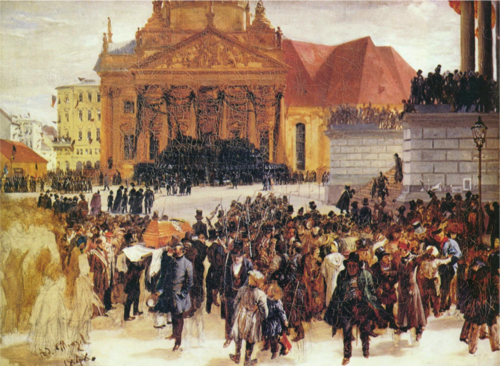
By October however, the Bolsheviks were no longer looking to play the same parliamentary game as the provisional government. Breaking with the St. Petersburg Soviet for not claiming power outright, and adhering to Marxist doctrine of revolution for Russia as the presage of global proletariat revolution, Trotsky and Lenin set to work in St. Petersburg to undermine the Kerensky government.
They did this by winning over much of the city garrison as well as the Baltic fleet in the fortress of Kronstadt. In late October Trotsky demanded that all military authority be vested in the Military Revolutionary Committee of the Petrograd Soviet, which was controlled by the Bolsheviks. Most of all the military units in the city signed their assent to a communicae demanding this resolution. The provisional government tried to stop it, could not and so fled to the front to try to collect loyal troops. There was almost no support for the Kerensky government on the frontlines and the troops that were loyal were beaten back by the Bolsheviks about a week later.
By early November the Bolsheviks were in charge of the St. Petersburg Soviet and all military power was vested into the Council of People’s Commissars drawn from predominantly Bolsheviks. Lenin was appointed premier and Trotsky as foreign minister. They immediately appropriated all lands to the peasants. This won them the support of the Social Revolutionaries (SRs), the party to their left and formerly supportive of the provisional government. Factory soviets were also given control of all industry. They offered an armistice to the Central Powers on Oct. 27 and it was enacted with a 10-day truce by Nov. 22. In response to bourgeoise passive counter-revolution tactics Lenin nationalized the banks, factories and rail service under the auspices of the Supreme Economic Council. All industries were nationalized by December of 1917. Later in 1918 many core commodities were declared state monopolies like sugar, matches, oil and other key necessities.
What precipitated after the assumption of power by Lenin, Trotsky and the Bolsheviks was the Russian Civil War which lasted from 1918 to 1920. This is of chief concern for our examination in Pasternak’s Dr. Zhivago. It is also the final ‘bottleneck’ point for competing visions of revolutionary Russia. The war was a large and complex one, spanning across almost all of Russia, differing in various manifestations based on the geographic locale and political affiliation of the belligerents. This is core to our thesis of investigation, as it is clear that there were many possible alternative political realities vying for control of a future Russian state, but only the Bolsheviks triumphed.
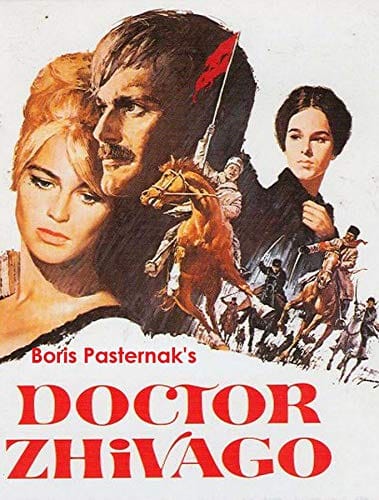
In short, the Bolsheviks, now the Red Army, faced four main enemies, they were the Leftist revolutionaries (Mensheviks, SRs, Anarchists), the Whites (Czarist-Militarist right leaning military units led by former imperial generals), various national armies of former Russian colonies (Poland, Ukraine, Baltic states, etc.) and Allied interventionist forces (British, French, American and Japanese). The Bolsheviks had their backs to the wall in 1918, beset on numerous fronts from the north-Arctic to Ukraine to Siberia to Manchuria. Yet somehow, the Bolsheviks pulled off what may have been seemingly impossible, and by 1920 the war was over.
The Red Army used massive mobilization, ‘War Communism’, as well as loosing the Cheka (political commissariat police) across Russia to both crush the main armies of the various factions, as well as quell internal dissent from the Bolshevik program via so many bullets as oppositional persons needed one. Indeed a ‘Red Terror’ was declared by the Leninist government. This is not to say that there were not atrocities on opposing sides, as ‘White Terror’ was a common occurrence as well. All to this end, sadly, over 10 million Russians died during this period not only through political extermination and war but also through starvation and disease, as the nationalization of the economy, strict Marxist-Leninist interpretation of wealth holdings and the destruction of the industrial capacity of Russia through the war led many to ruin.
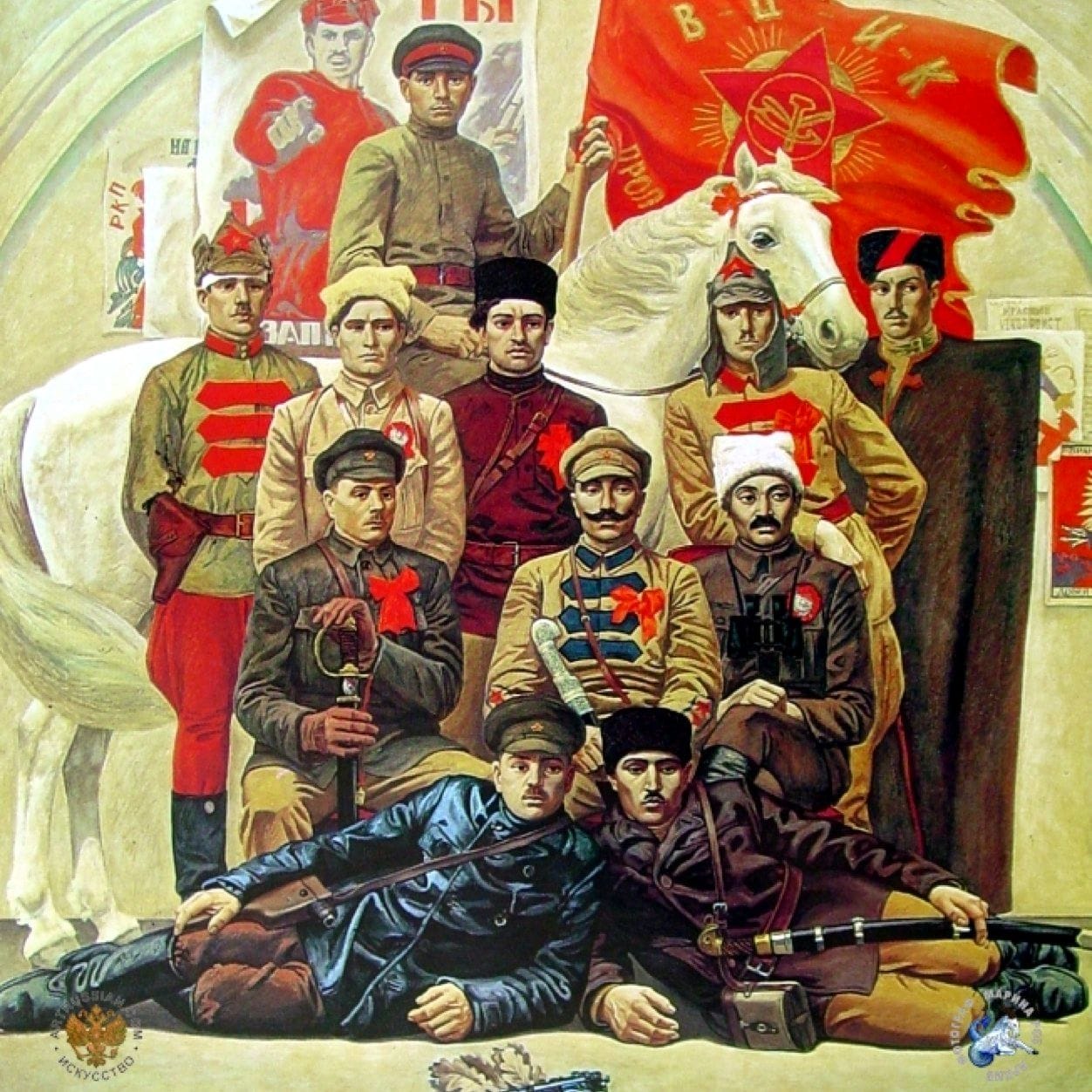
This period of Russia history is what a good deal of Dr. Zhivago deals in and we will examine it further in detail. The main protagonist, Dr. Yuri Andreevich Zhivago is the political scion of our good liberal nobles from Fathers and Sons, Nicholas and Arcady. A member of the intelligentsia sympathetic to the revolution, and indeed participatory in its early going, he eventually witnesses it’s cruel underbelly and monstrous capacity for ensuring its own instantiation as the political reality of Russia. Zhivago finds this monstrous revolutionary spirit embodied in the antagonistic interlocutor of the book, and one with whom he shares a lover, the imposing and ruthlessly effective revolutionary general, Strelnikov. We shall examine some select scenes with both these characters with a keen eye towards how their personal temperaments and political ideologies play out the history of the triumph of Bolshevism and how this relates to the long durée of Russian revolutionary firmament.
The novel covers over fifteen years of Russia history, so we sadly have to constrain ourselves to a few pertinent scenes. The first one will be when Zhivago is impressed into a band of Soviet partisans fighting the Whites under Kolchak in Siberia. Though in the back half of the novel, the conversations that Yury is forced to endure with his captor, the partisan commander ‘Liberius’, are essential to our thesis inquiry. Yury, having now passed through his initial revolutionary fervor, is war weary and desperate to save his young son and be with his lover (the former wife of Strelnikov), but is billeted with Liberius throughout two long years as the medical officer of the partisan detachment.
Liberius is not only a military commander, but also very involved with the socialist education of the peasanty in a Bolshevik manner. They also are both acquainted with Liberius’s father. Liberius also happens to be indulging in the Zhivago’s medical supply of cocaine and the following conversation is him pestering Yury, which is quite fruitful for our thread of thematic analysis.
“… I’ve often said to you, I don’t know much about the various shades of socialist opinion and I can’t see much difference between the Bolsheviks and other socialists. Your father is one of those to whom Russia owes her recent disorders and disturbances. He is a revolutionary type, a revolutionary character. Like yourself, he represents the principle of ferment in Russian life. (Zhivago)
…
You cut the study circle again last night. You have an atrophied social sense, just like an illiterate peasant woman or an inveterate bourgeoise. And yet you are a doctor, you are well read, and I believe you even write. How do you explain it?” (Liberius to Zhivago)
…
Heavens, Liberius Avercievich, I’m not being supercilious. I have the utmost respect for your educational work. I’ve read the discussion notes you circulate, they’re excellent. All you say about what the soldier’s attitudes should be towards his comrades, to the weak, the helpless, to women, and about honor and chastity - it’s almost the teaching of Dukhobars. All that kind of Tolsyotism I know by heart. My own adolescence was full of these aspirations towards a better life. How could I laugh at such things?
But firstly, the idea of social betterment as it is understood since the October Revolution doesn’t fill me with enthusiasm. Secondly, it is so far from being put into practice, and the mere talk about it has cost such a sea of blood, that I am not at all sure if the end justifies the means. And lastly, and above all, when I hear people speak of reshaping life it makes me lose my self-control and I fall into despair.
Reshaping life! People who can say that have never understood a thing about life – they have never felt its breath, its heart – however much they have seen or done. They look at it as a lump of raw material which needs to be processed by them, to be ennobled by their touch. But life is never a material a substance to be molded. If you want to know, life is the principle of self-renewal, it is constantly renewing and remaking and changing and transfiguring itself, it is infinitely beyond your or my theories about it” (Zhivago)
This conversation is essential to our query because it is a fascinating continuation of the dueling worldviews between Bazarov and Arcady/Nicholas, atheistic socialism vs. humanist liberalism, in peak form. In a book sixty years after it’s predecessor no less. Zhivago repudiates the material underpinnings of the Bolshevik world view in no uncertain terms. And as we saw before in the sentiments of Bazarov’s expulsion on the nihilist man being born to break other men, the demanding of fresh victims, here Zhivago is lamenting exactly this bloody price of instantiating a new world order. Zhivago may not be an ‘inveterate bourgeoise’, as he is and was sympathetic to the revolution, the ‘Tolstoyian’ striving for a ‘better life’ but he is not wont to try to impose these ideas by force of arms. He believes the heart of life is elsewhere and the endeavor ultimately impossible.
If Bazarov is the proto-form of the ‘revolutionary character’ in Russia, then Liberius and his father are the next two generations. But, Strelnikov is the apotheosis of this man of the revolutionary moment, decades in the making, cleaving the Bolshevik order into being out of the czarist ‘clay’ of life. Zhivago encounters him as the commander of the Red Army in the area of ‘Yuryatin’ (likely based on the real city of Perm) as he is traveling with his family to a small hamlet to avoid the war. In Zhivago’s first encounter with him, he is described thusly;
“For some unknown reason, it was clear at once that this man was a finished product of the will. So completely was he himself, the self he chose to be, that everything about him struck one immediately as a model if its kind – his well-proportioned, handsome set head, his eager step, long legs, knee-boots…
Such was the irresistible effect of his brilliance, the unaffected ease and his sense of being at home in any conceivable situation on earth.
He must certainly, Yury thought, be possessed of a remarkable gift…”
This incredible description is important in its portrayal of Strelnikov’s personality. Shortly thereafter on the same page, his revolutionary bonafides are elaborated:
“Those who controlled appointments were impressed by him: in those days of inordinate rhetoric and political extremism his unbridled revolutionary fervor fitted the spirit of the times and stood out in its sincerity and fanaticism, neither borrowed nor accidental, but his own, deliberately fostered by him and developed by the circumstances of his life.
His fighting record over the past few months included the burning of Lower Kelmes, the suppression of the Gubassovo peasants who had put armed resistance to food levies, and of the men of the 14th line regiment, who had plundered a food convoy. He had also dealt with the ‘Razin’ soldiers who had started a rebellion in the town of Turkatuy and gone over to the Whites, and with the rebellion at Chirkin Us, where a loyal commander had been killed.
In each case he … had investigated, tried, sentenced, and enforced his sentences with speed, harshness and resolution.”
As we can see Strelnikov is indeed the apotheosis of the spirit of revolution nascent in Bazarov. He is a proletarian and comrade in leadership, but for anyone reactionary or counter-revolutionary he is a swift judge, jury and execution. A few paragraphs later;
“Strelnikov (‘the shooter’) knew that rumor had nicknamed him Razstrelnikov (‘the executioner’). He took it calmly, he was disturbed by nothing.
…
… He nursed his grievances and with them the ambition to judge between life and the dark forces which distort it, and to be life’s champion and avenger.
Embittered by his disappointment, he was armed by the revolution”
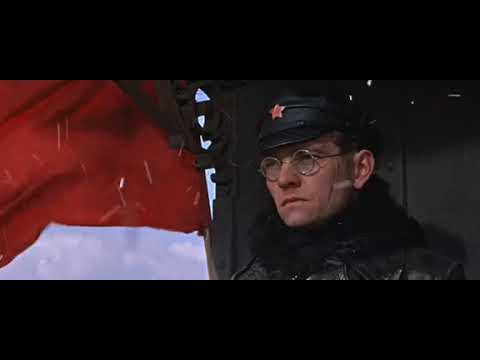
Here in the above quotes Pasternak lays bare his assessment of this particular type of revolutionary. He believes these people are reductive in their assessment of life, and instead of adjusting their conception of life, their animosity curdles into a revolutionary fervor that is then employed in the armed struggle for Bolshevik supremacy in Russia. At the conclusion of the chapter, Strelnikov questions Zhivago on his passage to Varykino, the hamlet where Zhivago seeks to reside with his family. Strelnikov’s response is searing in it’s moral and religious themes:
“Next you’ll be handing me a reference form the People’s Commissariat of Education or Health to prove you are a Soviet citizen or a ‘sympathizer’ or ‘entirely loyal’. These are apocalyptic times, my dear sir, this is the Last Judgement. This is a time for angels with flaming swords and winged beasts from the abyss, not for sympathizers and loyal doctors….”
Strelnikov is the exact opposite of Zhivago at this point in the novel; one is bent on survival and protecting life as he sees it, through his family and finding a haven in the conflict. The other is consumed with self-righteous fire, waging war to cleave a new reality into being.
This is fully demonstrated to the utmost logical end near the conclusion of the novel. Strelnikov and Zhivago end up in the same isolated home where years before they had almost met, and where Zhivago had for a time lived with Stelnikov’s former wife Lara Antipova. The symbolism is masterful as the two men of the revolution who are both married to it in different ways, are also ‘married’ in a strong sense to the same woman. So to it continues in this potent scene where Strelnikov, being on the run due to ‘trumped-up charges’ by the very same revolution he furthered so much, explains to Yury a great deal of his motivations for running full-long into the revolution. These explanations in this scene tie together a great thread of the book, as well as a major vein of our own inquiry.
Strelnikov spends the night between he and Zhivago explaining his proletarian origins, falling in love with Lara Fyodrovna and how he mastered a great deal of knowledge in becoming a teacher where they lived together in the novel’s central city of Yuryiatin, having a daughter together. Here too he reveals the core of why he became a central force of the revolution. He explains that he was ashamed of Lara’s love for him and that he needed to ‘finish his life’s work first’ before being able to settle down with his wife and daughter. Now on the run from the Cheka, he would give anything in the world to be with them. And multiplying the tragic irony more dramatically still, Zhivago relates to him how Lara had told Zhivago himself how deeply she was in still in love with Strelnikov and would give anything to be with him.
This is the apotheosis of the great tension that we have seen in both these novels and have been examining herein. The revolutionary character’s inability to love in domestic banality, thereover giving in to zealous self-righteousness juxtaposed with the liberal intellectual’s desire for the ‘heart of life’ and domestic tranquility. We see this in Fathers and Sons with Bazarov and Madame Odinstov and in Dr. Zhivago with Strelnikov and Lara. The great sadness of these books, the moral lesson they may be pointing to, is that the bloody erring of so many revolutionary men may lie in a fundamental inability to love. That their lack of capacity for a peaceful life is cathected into revolutionary activity. And so they become harbingers of destructive retribution as opposed to generative beings because they cannot align with life’s ‘principle of self-renewal’ as Zhivago describes.
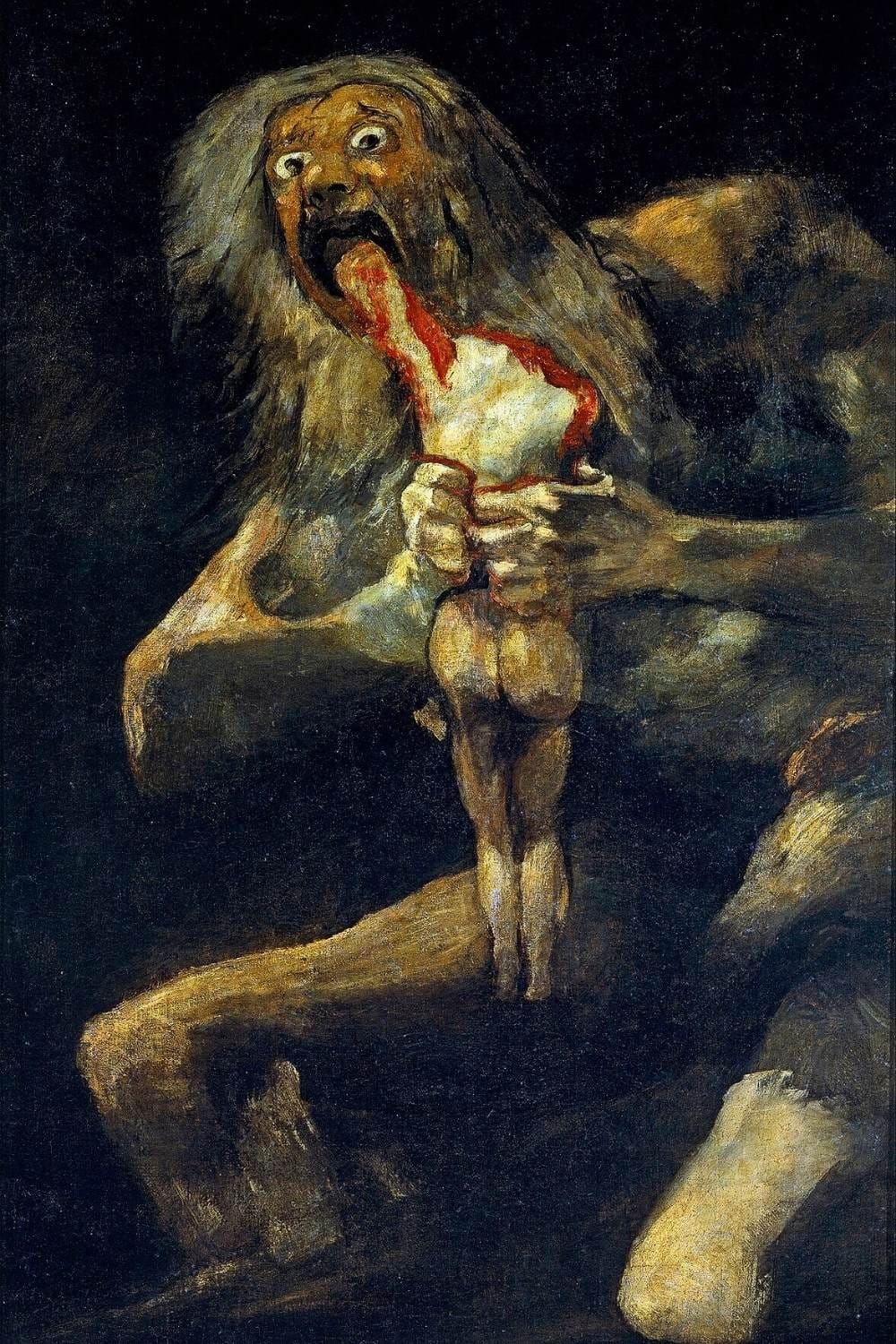
Ultimately, like the mythological motif in the Goya painting Saturn Eating his Son, as with many revolutions, Strelnikov is destroyed by a force he helped create. In the scene, as the two men finally part for the night, he warns Zhivago he will be arrested and shot by the Cheka, “They’ll arrest me and won’t allow me to say a word in my defense… Don’t I know how it’s done!”. As he had done so many times, he will now be on the wrong end of the firing squad. So, the novel ends tragically for Strelnikov. Unable to wash off the six years of revolutionary blood on his hands in order to reunite with his precious love and family, he takes his own life. Zhivago finds him the next morning with a bullet in his brain, lying in the snow.
Now we might try to summarize and come to some potentially interesting conclusions. The books Fathers and Sons and Dr. Zhivago represent a through-line of revolutionary thought, experience and progress throughout Russian history in numerous ways. They explore in poignant, keen detail the core motivations of both revolutionary characters exemplified in Bazarov and Strelnikov, as well as Russian liberals, exemplified in Nicholas Petrovich, his son Arcady and Dr. Yuri Zhivago.
These characters reveal two major themes we have examined in this essay – the internecine conflicts within revolutions broadly and the Russian one particularly between liberals and leftists – and the core worldviews that such people bring to bear that shape their revolutionary activity. For liberals there seems to be romantic-humanism as their core animating feature, whereas the revolutionary leftists bring a materialist-atheism to bear. This split is chiefly manifested in a particular character’s penchant for violence to achieve revolutionary ends. Liberals do not typically take this step, however sympathetic to a revolution they may be, leftists in these novels are represented as being thoroughly for it. This difference may be promulgated by the material comfort of liberals. Regardless, these novels offer tremendous psychological and sociological insight into the people who make revolutions happen. In conjunction with the studying of macro-level, empirical data, they are an invaluable resource for understanding the why and how of various revolutionary phenomenon.
In turn political moment we have sought to understand, the triumph of Bolshevism, can at least be understood in part through the character and thematic analysis of these two novels. The revolutionary characters of the novels are far more willing to do violence to achieve revolutionary aims, particularly Bolshevism. They may be critiqued in the novels as men incapable or deformed in their ability to truly love on a humane level, and this creates great pathos. But in the zero-sum game of political revolutions they win out compared to their liberal counterparts. This is because, at least in the Russian context, and perhaps more widely, the Russian aristocracy and intelligentsia of liberal bent are grounded in a non-violent humanism, bordering on romanticism. At least in these two works, they are portrayed as not having a revolutionary program in the least, let alone one that relates to violence as clearly, and though brutally, as effectively as what will eventually become Bolshevism.
Indeed they seem to be operating from totally different assumptions, or ‘worldviews’, as I have them described them often in this essay. Therefore, at least in Russia, liberals were never destined to triumph politically. As is so aptly put by Strelnikov, the revolution is about;
‘Marxism… the whole of this new system with it's novelty, swiftness of it’s conclusions, its irony and it’s pitiless remedies invented in the name of pity – all of this was absorbed into Lenin, to be expressed and personified by him and to fall upon the old world as retribution for its deeds’.
The liberals in these novels, no matter how beautiful or true their sentiments, do not compete with a program such as this. And thus, in the real world, the political moment of the triumph of Bolshevism can be understood more fully in this way.